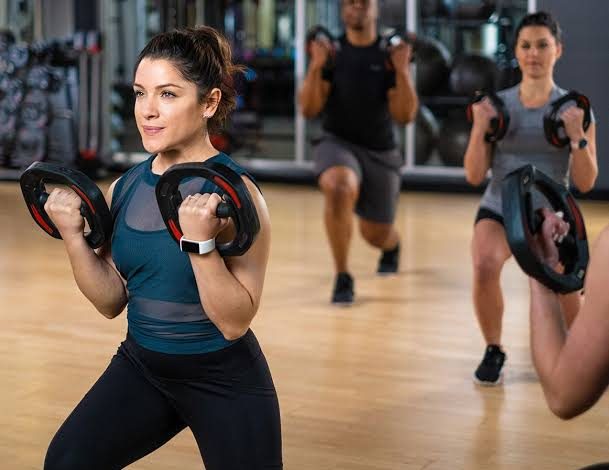
Participants often focus on the back, shoulders and arms during upper-body tracks, but the hands and forearms can become the first limiting factor. In a bodypump class, repeated deadlifts, rows, clean-and-press movements and bar transitions create substantial cumulative grip demand.
When grip fatigue develops early, participants may reduce range, alter wrist position or use excessive momentum even though the target muscles could continue working.
Grip Works Across Several Tracks
The hands hold the bar during squats, chest work, back exercises and some arm tracks. By the time the class reaches demanding pulling or shoulder movements, the grip has already completed considerable work.
This accumulated exposure is easy to overlook because the hands are rarely described as the target muscle group.
Track order therefore influences when grip becomes noticeable.
Pulling Movements Depend on Secure Contact
Rows and deadlifts require the participant to maintain a stable connection with the bar. As the forearms fatigue, the bar may begin slipping or the grip may tighten excessively.
The participant can become more focused on holding the bar than moving through the intended range. Back-muscle loading then becomes limited by the hands.
A slightly lighter load may allow a more productive pulling track.
Clean-and-Press Sequences Add Complexity
A clean and press requires the bar to change position quickly. The hands must guide the transition while the legs, hips and shoulders produce force.
Fatigued grip can make the bar path less consistent. Participants may pull the bar away from the body or catch it with uncomfortable wrist positioning.
Complex transitions deserve a greater technical margin than stable repetitions.
Excessive Grip Creates Early Fatigue
Some participants squeeze the bar as hard as possible throughout every track. A secure grip is necessary, but constant maximum tension can fatigue the forearms prematurely.
The grip should match the task. During stable sections, unnecessary hand and shoulder tension can be reduced without allowing the bar to become loose.
Recovery periods provide an opportunity to relax and reposition the hands.
Wrist Position Influences Grip Efficiency
A wrist held in excessive flexion or extension can reduce comfort and make the bar harder to control. The participant may compensate by gripping more tightly.
The wrist should remain reasonably aligned according to the exercise. Grip width also affects how the shoulders and wrists receive the load.
Instructor setup cues should be followed before fatigue makes adjustments harder.
Sweaty Hands Change the Problem
Singapore’s humidity, studio temperature and repeated effort can make the hands slippery. Participants may respond by squeezing harder.
A towel can help keep the hands and bar dry during transitions. The bar should remain clean and secure.
Gloves may suit some participants, but they should not conceal an unsuitable grip or equipment problem.
Shoulder Tracks May Inherit Earlier Fatigue
The shoulders often appear later in the class, after pulling and pressing work. The grip and forearms may already be tired before overhead movements begin.
Participants can use lighter plates or dumbbells where the format allows. The goal is to challenge the shoulders without allowing the hands to dictate unstable movement.
Previous track performance should inform the next load choice.
Signs That Grip Is the Limiter
Grip fatigue may be dominant when:
- The bar feels as though it is slipping.
- Forearm burning appears before back fatigue.
- Wrist position changes repeatedly.
- Range shortens as the hands tire.
- The participant needs to stop despite feeling capable in the target muscles.
- The shoulders and neck become increasingly tense.
These signs help distinguish grip limitation from general exhaustion.
Load Selection Should Respect the Weakest Link
A bar may be appropriate for deadlifts but excessive for rows or clean-and-press combinations. Participants should choose resistance for the complete track.
If one exercise repeatedly causes grip breakdown, the load can be reduced before that section. Where class flow allows, a different setup may be prepared.
Using more weight is not beneficial when it removes control from the target movement.
Independent Training Can Support Grip
Loaded carries, controlled rows and appropriate holding exercises can develop grip endurance outside the class. The amount should be progressed gradually.
Additional grip work also creates fatigue, so it should not be placed immediately before a demanding class. The wider programme must remain balanced.
Grip training should support class performance rather than exhaust the hands further.
Equipment and Technique Need Consistency
Bar diameter, surface condition and plate changes can influence how difficult the bar feels to hold. Participants should use secure equipment and report damage or unusual slipperiness.
At True Fitness Singapore, consistent equipment and instructor guidance can help members assess whether grip fatigue comes from load, technique or accumulated class volume.
Strong Target Muscles Still Need a Usable Grip
The back and shoulders can receive only the load that the participant can hold and control. When the grip fails first, increasing bar weight does not create better upper-body training.
Participants should manage hand tension, wrist position and load across the entire class. A secure but efficient grip allows the target muscles to remain the reason the track becomes challenging.