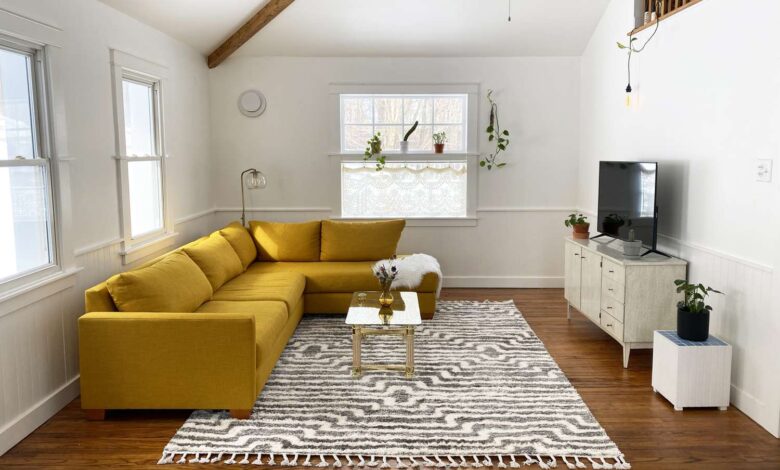
An area rug serves as the structural foundation of a living room. It acts as an anchor that unifies independent furniture pieces, defines specific functional zones, and establishes the spatial scale of the entire room. When selected properly, a rug creates visual balance, softens architectural hard lines, and introduces essential acoustic absorption. Conversely, an incorrectly sized area rug can disrupt the entire design scheme. A rug that is too small makes a spacious room feel disjointed and cheap, while an oversized rug can overwhelm the architecture and make the layout feel cramped.
Selecting the ideal dimensions requires analyzing the architectural footprint of your space, understanding standard furniture clearance guidelines, and choosing a layout strategy that matches your lifestyle. This guide breaks down the technical principles of area rug selection to ensure your next investment fits your living room perfectly.
Architectural Principles of Rug Selection
Before evaluating standard rug dimensions, you must analyze the structural realities of the living room. Area rugs interact directly with sightlines, traffic pathways, and flooring borders.
The primary rule of spatial design dictates that a rug should mirror the shape of the seating area it supports. Square or rectangular rooms benefit most from matching square or rectangular rugs. Long, narrow living spaces call for elongated rugs that draw the eye along the primary axis of the room.
Maintaining a consistent perimeter of exposed flooring between the edge of the rug and the walls is critical for maintaining visual balance. In standard to large rooms, aim to leave twelve to eighteen inches of bare floor visible around the outside of the rug. In smaller living rooms, this perimeter can be reduced to six to eight inches. This exposed border prevents the rug from looking like poorly installed wall-to-wall carpeting, allowing the underlying hardwood, stone, or luxury vinyl tile to frame the design element.
Consider the layout of your entryways and high-traffic pathways. A rug should never end directly in the middle of a major walking path. This positioning creates a persistent tripping hazard and accelerates uneven wear along the edges of the pile. Ensure that pathways are either completely on the rug or completely off it to maintain a smooth, safe walking surface.
Standard Living Room Rug Dimensions and Their Applications
Area rugs are generally manufactured in predictable, standardized dimensions. Understanding how these common sizes interact with standard living room furniture helps narrow down your search.
The 5×8 Feet Rug
This size is best suited for compact living spaces, apartment layouts, or dedicated secondary seating alcoves. A five-by-eight-foot rug is rarely large enough to fit beneath multiple pieces of large furniture. Instead, it is used as a central accent piece that sits directly under a coffee table, positioned safely in front of a primary sofa.
The 8×10 Feet Rug
This is the most versatile and frequently specified size for standard residential living rooms. An eight-by-ten-foot rug accommodates mid-sized to large furniture arrangements with ease. It provides enough surface area to slide comfortably under the front legs of a standard eight-foot sofa and a pair of coordinating accent chairs, anchoring the group into a single cohesive unit.
The 9×12 Feet Rug
Ideal for large, open-concept spaces or grand formal living rooms, a nine-by-twelve-foot rug offers the scale required to anchor expansive seating arrangements. This size allows all four legs of your major furniture pieces to rest fully on the woven surface, creating a generous, high-end look that matches large architectural scales.
Three Proven Furniture Layout Strategies
How you position your furniture relative to the rug determines the overall flow and energy of the room. Designers rely on three primary layout strategies, each serving a specific aesthetic and functional purpose.
All Legs on the Rug
This layout represents the pinnacle of formal residential design. It requires a large canvas, typically a nine-by-twelve-foot or ten-by-fourteen-foot rug, where the sofa, accent chairs, side tables, and coffee table sit entirely within the perimeter of the rug.
-
Best For: Large, open-concept floor plans where the living area needs to be structurally defined as an independent zone away from dining spaces or hallways.
-
Design Result: It creates a unified, floating island effect that feels grounded, intentional, and luxurious.
-
Proportion Tip: Ensure the rug extends at least six inches beyond the outermost edges of the furniture to keep the arrangement from feeling squeezed.
Front Legs on the Rug
This highly adaptable approach works beautifully across a wide variety of room sizes. In this scenario, only the front two legs of the sofa and accent chairs rest on the rug, while the rear legs remain on the bare flooring.
-
Best For: Standard rectangular living rooms, spaces where furniture is pushed closer to the walls, or rooms utilizing an eight-by-ten-foot rug.
-
Design Result: It connects separate seating pieces into a single group while saving floor space and keeping costs down.
-
Proportion Tip: The rug must slide under the furniture by a minimum of six to eight inches. This deep overlap ensures the rug feels structurally tucked beneath the weight of the seating, preventing it from sliding or looking like an afterthought.
All Legs Off the Rug
This minimalist approach keeps all major seating pieces completely off the area rug, leaving only the coffee table to rest centered on the woven surface.
-
Best For: Small apartments, tight urban spaces, or when showcasing a rare, intricate, or highly textured accent rug.
-
Design Result: It keeps sightlines open and highlights the underlying flooring material, but it can make a room feel cold or fragmented if not executed carefully.
-
Proportion Tip: To keep the scale accurate, choose a coffee table that fills a substantial portion of the rug, and ensure the distance between the edge of the rug and the front of the sofa does not exceed five inches.
Managing Sectional Sofas and Unique Floor Plans
Sectional sofas present unique challenges due to their large visual weight and asymmetrical footprints. Standard rectangular rugs can easily look unbalanced when paired with an L-shaped or chaise sectional if the proportions are off.
When working with an L-shaped sectional, the rug must be large enough to extend beneath both wings of the seating unit. An eight-by-ten-foot or nine-by-twelve-foot rug is usually necessary to ensure the corner piece and both ends have their front legs firmly anchored. The rug should extend past the outer edges of the sectional by at least eight inches to balance the sofa’s strong geometric lines.
For open-concept homes where the living room connects directly to the dining area or kitchen, area rugs are vital tools for defining space. Use a large, low-pile area rug to outline the boundaries of the living area without relying on physical walls. This maintains the airy feel of the open floor plan while giving the eye a clear understanding of where the relaxation zone ends and the dining zone begins.
Critical Practical Considerations
Choosing the right rug size also requires evaluating day-to-day usability, safety, and material performance.
-
Doorway Clearance: Measure the gap between the bottom of your doors and the flooring. High-pile rugs or thick wool shags can catch on doors, blocking paths and damaging the rug fiber. In high-traffic entry points, stick to low-profile woven options or flat-weaves.
-
Floor Grates and Vents: Never cover HVAC floor registers or return vents with an area rug. Blocking these vents disrupts home airflow, lowers climate control efficiency, and can create a safety hazard. Position your rug to run alongside these utilities rather than over them.
-
The Importance of Rug Pads: A premium, non-slip rug pad should be ordered to match your rug’s exact dimensions, trimmed just one inch smaller than the rug perimeter. Pads prevent bunching, curling, and sliding, which can alter how the size looks in the space. They also provide extra cushion and shield your underlying hardwood or stone from abrasive backing materials.
Frequently Asked Questions
What should I do if my favorite rug is too small for my living room layout?
If a rug you love is too small to anchor your furniture properly, you can use a design technique known as layering. Purchase an inexpensive, durable, and oversized natural fiber rug, such as sisal or jute, in the correct size for your room, like a nine-by-twelve-foot option. Center your smaller, decorative rug directly on top of the natural base. This expands your visual footprint while highlighting the unique design of the smaller textile.
How do I select an area rug size if my living room features an asymmetrical fireplace?
When dealing with an asymmetrical fireplace or an off-center architectural focal point, orient the area rug to align directly with the primary seating grouping rather than trying to center it on the fireplace wall. The rug should anchor the furniture layout first. This creates a balanced conversational zone that grounds the eye, making any architectural irregularities feel like an intentional design choice.
Should an area rug extend underneath a television console or media cabinet?
No, an area rug should generally stop short of a television console or media cabinet. Media units are heavy, static pieces of storage furniture that do not participate in the conversational seating group. Allowing a rug to run partially under a media console can cause the unit to tilt slightly forward, creating an unstable surface for electronics and disrupting clean horizontal sightlines.
How do I calculate the right rug size for a round living room or a curved seating arrangement?
Curved sofas or circular seating groups are best paired with large round area rugs. To find the correct diameter, arrange your curved furniture into its ideal position, measure from the outer back edge of one piece across the center to the opposite piece, and add twelve inches. A round rug should be large enough to hold at least the front legs of all curved furniture pieces to keep the circular flow intact.
What are the structural layout rules for placing a rug over wall-to-wall carpeting?
When layering an area rug over wall-to-wall carpeting, the scale rules remain identical to hard surface installations, but anchoring becomes even more critical. You must use a substantial size, such as an eight-by-ten-foot or nine-by-twelve-foot rug, and place the heavy weight of the sofa and chairs directly on top of it. This weight holds the rug flat, preventing it from shifting, bunching, or rippling when people walk across the carpet pile below.
How does the weave or pile height of a rug impact the visual perception of its size?
High-pile or shag rugs hold more visual weight and can make a small room feel crowded if the dimensions are too large. Conversely, flat-weave rugs, low-pile wool, or printed performance rugs have a slim profile that takes up less visual space. This sleek look allows you to select a larger footprint without overwhelming a small or minimally furnished living room.
